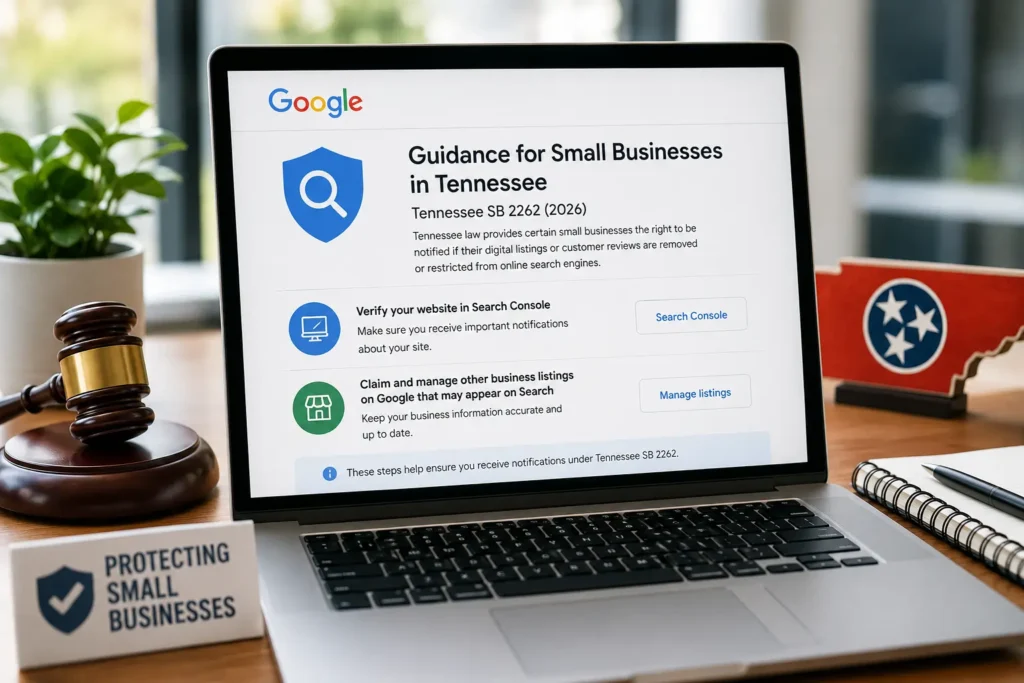

Google has introduced new guidance for small businesses in Tennessee following the passage of SB 2262, a law aimed at increasing transparency when businesses experience reduced visibility in search results or significant review removals.
The legislation, which takes effect on July 1, 2026, gives qualifying small businesses the right to request explanations from search engines if they believe they have been “blacklisted.” The move represents a significant shift in the relationship between search engines and local businesses that depend on online visibility.
What Is Tennessee SB 2262?
Tennessee’s SB 2262 is designed to protect small businesses from unexplained actions that negatively impact their online presence.
Under the law, a search engine may be considered to have “blacklisted” a business if it:
- Reduces the visibility or accessibility of the business website in search results.
- Removes the website or its search listing entirely.
- Deletes or removes 25% or more of the business’s online reviews.
The law applies to businesses with 50 or fewer employees.
What Rights Do Small Businesses Have?
An earlier version of the bill would have required search engines to proactively notify businesses whenever they were blacklisted. However, the final version instead gives businesses the right to request an explanation.
If a small business believes it has been affected, it can contact the search engine and demand a response.
Within five business days, the search engine must provide:
- An explanation of the action taken.
- The justification behind the action.
- Information about the appeal process.
- Steps required for restoration or re-indexing.
This creates greater accountability and transparency for search platforms.
Google’s Response to the New Law
In response, Google has published guidance specifically for Tennessee businesses to help ensure they receive important notifications.
Google recommends businesses:
1. Verify Their Website in Google Search Console
Search Console allows website owners to receive alerts about:
- Spam policy violations
- Indexing issues
- Manual actions
- Security problems such as malware or hacked content
- Certain legal removals
Keeping Search Console verified helps businesses monitor their site’s health and search performance.
2. Claim and Manage Their Google Business Profile
Businesses should ensure their Google Business Profile is claimed and actively managed.
Benefits include:
- Better visibility in local search
- Easier management of customer reviews
- Access to business-related notifications
- Improved communication regarding listing issues
3. Set Up Google Merchant Center (If Applicable)
Retail businesses can also benefit from maintaining an active Merchant Center account, which helps manage product listings and receive relevant alerts.
Why This Matters for SEO
For many local businesses, Google Search generates a significant share of website traffic and customer leads.
A sudden decline in rankings or the removal of numerous positive reviews can lead to:
- Reduced organic traffic
- Lower customer trust
- Fewer inquiries and sales
- Decreased local search visibility
The Tennessee law provides businesses with a clearer path to understanding why these issues occur and how they can address them.
Will This Affect Businesses Outside Tennessee?
Currently, the law applies only to qualifying businesses in Tennessee. However, it reflects a growing trend toward greater oversight of large technology platforms and increased transparency in digital marketplaces.
Other states may consider similar legislation if these protections prove effective.
Best Practices for Small Businesses
To protect your online presence:
- Verify your website in Google Search Console.
- Claim and optimize your Google Business Profile.
- Monitor customer reviews regularly.
- Follow Google’s spam and quality guidelines.
- Keep business information accurate and up to date.
- Document any sudden changes in rankings or reviews.
Final Thoughts
Tennessee’s SB 2262 marks an important step toward improving transparency between search engines and small businesses. Rather than leaving business owners guessing why their visibility or reviews have changed, the law establishes a formal process for requesting explanations and pursuing appeals.
For businesses that rely heavily on Google Search, staying proactive with tools like Google Search Console and Google Business Profile will be increasingly important for maintaining visibility and protecting their online reputation.