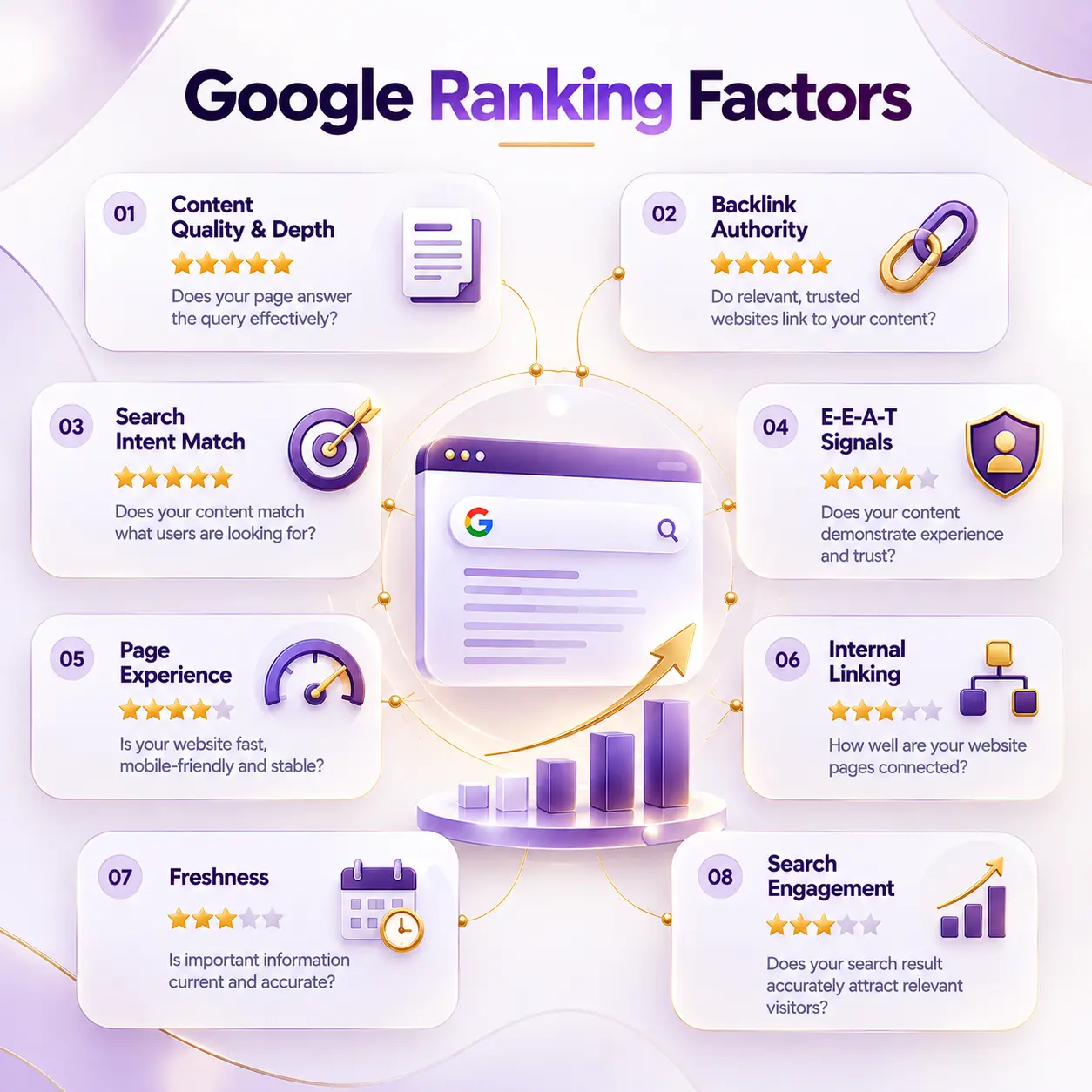

Have you ever wondered why some websites appear on the first page of Google while others do not? Google uses a complex set of systems to discover, understand, and rank webpages. The basic process can be understood through three stages: Crawling, Indexing, and Ranking.
What is the first step in how google processes webpages?
1. Crawling: Google Discovers Your Website
Crawling is the first step. Google uses automated bots called Googlebot to discover webpages across the internet. These bots follow links, check websites, and find new or updated content.
Think of Google as a librarian discovering new books. Before Google can understand your webpage, it first needs to find it.
2. Indexing: Google Understands Your Content
After discovering a webpage, Google analyzes its content and stores information about it in its search index. This process is called indexing.
Google looks at the page content, headings, links, images, and other information to understand what the page is about.
If Google cannot properly access or index your page, it may not appear in search results.
3. Ranking: Google Chooses the Best Results
When someone searches on Google, its systems look through the index and identify pages that are relevant to the search.
Google considers many signals to determine which results are useful and relevant. The search query, content quality, relevance, website context, and many other factors can influence the results.
This is why simply adding keywords to a page is not enough.
How does google's search algorithm work?
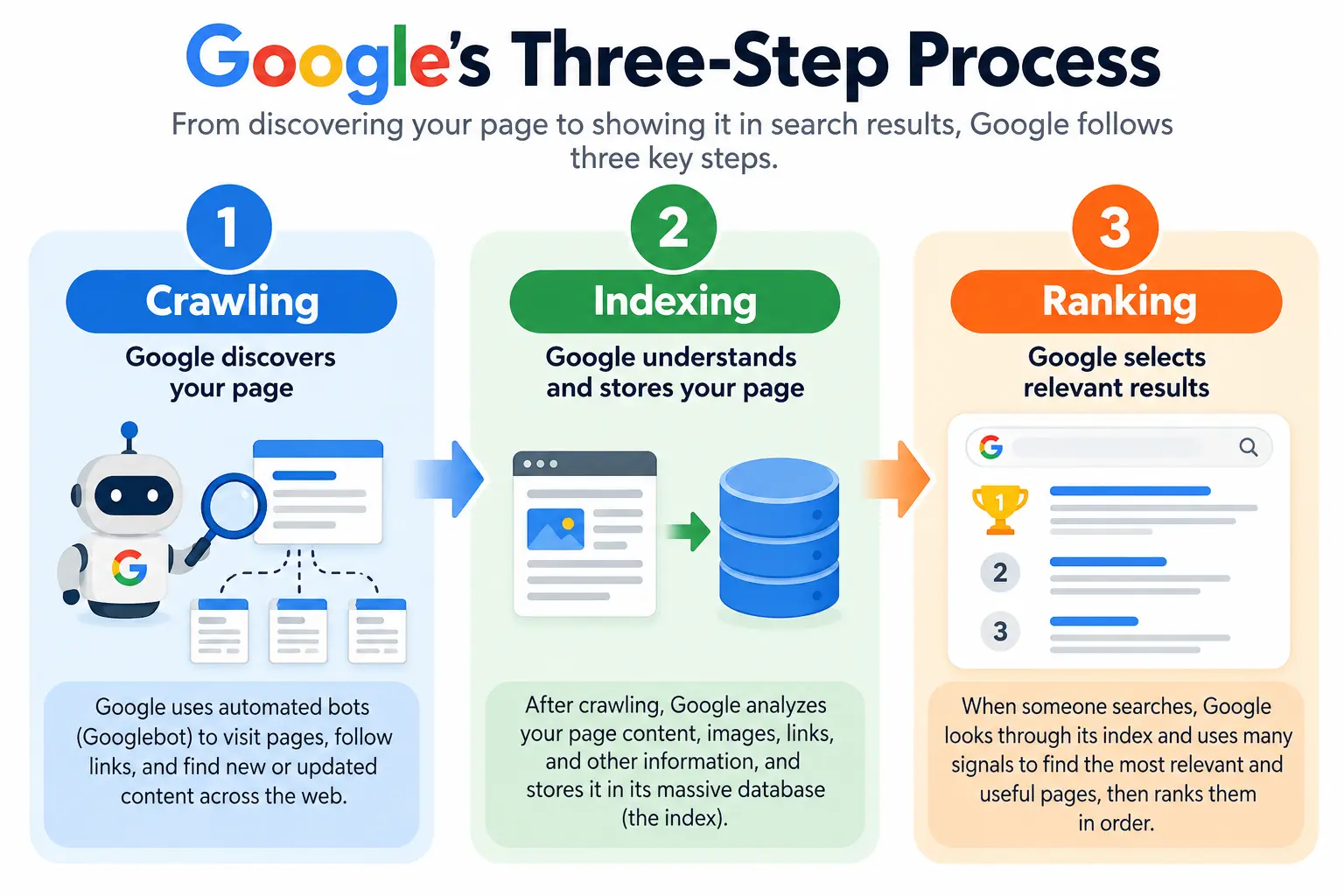
How does google rank search results Google's Three-Step Process
The process is simple to remember:
Crawling → Google discovers your page
Indexing → Google understands and stores your page
Ranking → Google selects relevant results
Each stage is important for your website to gain visibility in search.
Helpful Content Matters
Google increasingly focuses on content that is created to genuinely help people. Content should answer the user's question clearly instead of being written only to target keywords.
For example, if someone searches "How to improve website speed," they want practical information that helps them improve their website. A page that simply repeats the keyword without providing useful answers is unlikely to create a good experience.
Write for People First
Modern SEO is not about stuffing keywords into every paragraph. It is about understanding what people are searching for and giving them a useful answer.
Before publishing content, ask yourself:
Does this answer the user's question?
Is it easy to understand?
Does it provide useful information?
If the answer is yes, you are already following one of the most important principles of modern SEO.
Final Thoughts
Google Search starts with crawling, continues with indexing, and then uses ranking systems to deliver relevant results to users.
The best approach is simple: create useful content for people first, then optimize it for search engines.
Don't write content just to rank. Write content that deserves to rank.