Google uses many signals to understand and rank web pages. There is no single factor that guarantees a top position. However, focusing on content, authority, relevance, technical SEO and user experience can create a strong foundation for organic visibility.
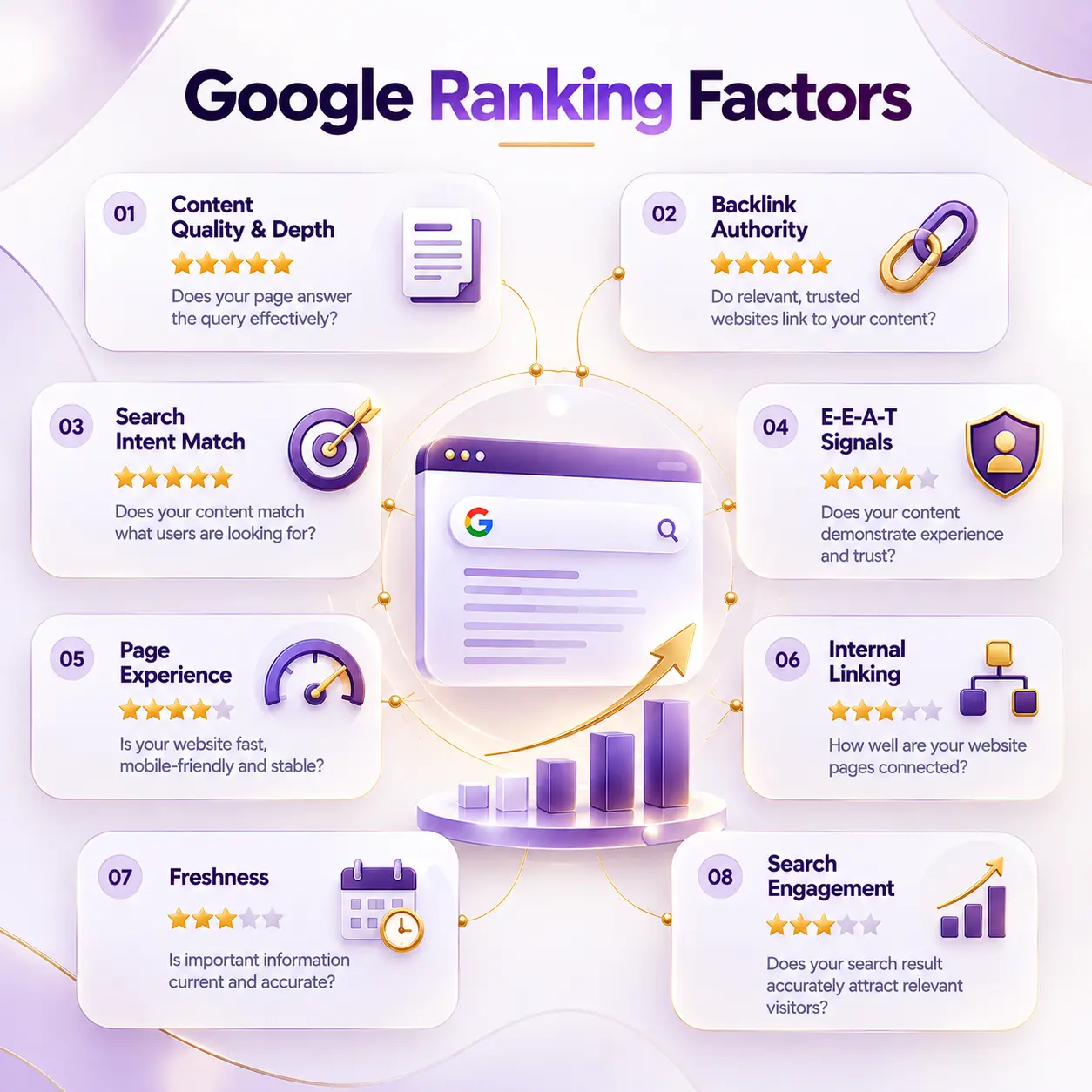
1. Content Quality & Depth
Your content should answer the user's question clearly and completely. Avoid writing only to increase word count. Cover the important points, provide useful examples and make the information easy to understand.
The goal is simple: give users a better answer to their search.
2. Backlink Authority
Backlinks from relevant and trusted websites can strengthen your site's authority. Quality is more important than quantity.
Focus on earning links through useful resources, original research, digital PR, expert content and industry publications.
3. Search Intent Match
Your content needs to match what users actually want.
For example, someone searching "SEO audit checklist" expects a practical guide or checklist. Someone searching "SEO agency" may be looking for a service provider.
Understanding intent helps you choose the right content format and topic.
4. E-E-A-T Signals
E-E-A-T stands for Experience, Expertise, Authoritativeness and Trustworthiness.
Show your expertise through author profiles, case studies, original research, professional experience and reliable sources. Real examples can also make your content more useful and credible.
5. Page Experience
A fast and mobile-friendly website provides a better experience for visitors.
Pay attention to:
Core Web Vitals
Page speed
Mobile usability
Stable layouts
HTTPS
Easy navigation
Technical improvements should support the overall experience rather than exist only for search engines.
6. Internal Linking
Internal links connect related pages on your website. They help visitors discover more useful content and help search engines understand how your pages are connected.
For example, this article can link to your guide on how Google crawls, indexes and ranks websites and your Google Business Profile optimization guide.
7. Content Freshness
Some topics require regular updates, especially SEO, technology, pricing, statistics and industry trends.
Review older content and update outdated information, examples and recommendations when needed. A useful update should improve the page rather than simply change its publication date.
8. Search Result Engagement
Your title and description should accurately communicate what users will find on the page.
A relevant and compelling search result can encourage the right users to click. Avoid misleading titles or descriptions designed only to generate clicks.